Jayshree Textiles is a cotton yarn dyeing and fabric bleaching company located in Erode, Tamil Nadu, India. Jayshree’s dyeing and bleaching unit produces about 250 kilo liters per day (KLD) of wastewater. This textile effluent contains considerable amounts of hazardous pollutants – recalcitrant organic, colored, toxicant, surfactant and chlorinated compounds and salts, as well as the presence of heavy metals.
Environmental regulations have made mandatory the treatment of textile effluent before allowing it to flow into the natural ecological system. The lack of fresh water availability has also necessitated that wastewater be treated for recycle and reuse for Jayshree’s textile process.
To treat their wastewater, Jayshree initially installed conventional pretreatment consisting of coagulation and flocculation to take care of the suspended solids. After the pretreatment, a conventional biological process was implemented for biological oxygen demand (BOD) & chemical oxygen demand (COD) removal. The final treated effluent after clarification was taken through filtration followed by an ultrafiltration (UF) and reverse osmosis (RO) system. The RO treated water was then recycled and reused for textile processing.
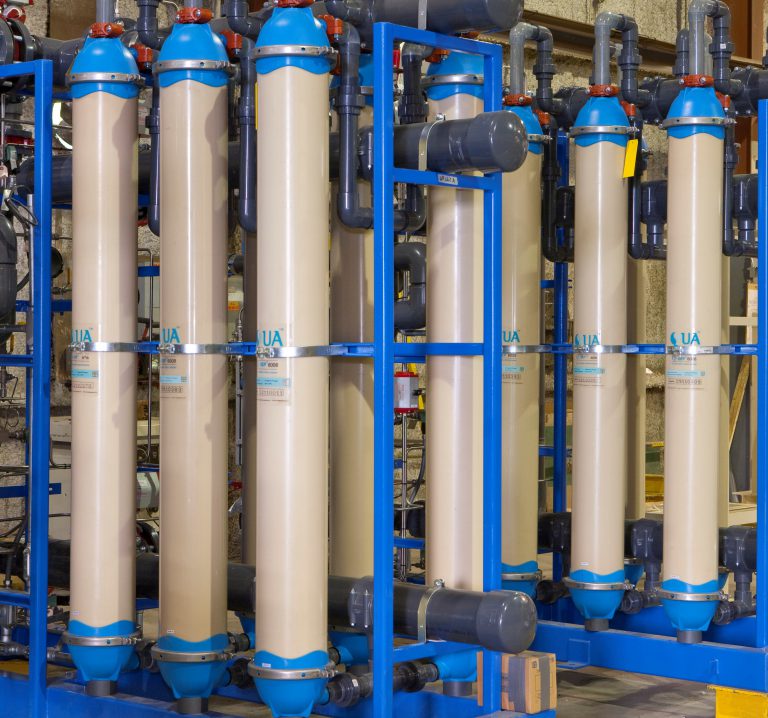
The feed water to the UF system was tertiary treated textile effluent. The UF plant was configured with another manufacturer’s membranes and was designed for an output capacity of 12m3/hr. A crossflow of 5m3/hr was being carried out to reduce the impact on the membrane due to the challenging water which was prone to fouling.
The Challenge
The client encountered issues with the ultrafiltration membrane system soon after initial installation.
Textile wastewaters are characterized by extreme fluctu-ations in many parameters such as BOD, COD, pH, color and salinity. At Jayshree Textiles, the UF feed water – sec-ondary treated effluent – had higher than expected BOD and COD, with BOD in the range of 50-150 ppm and COD in the range of 400-700 ppm. The UF membranes installed were not able to perform under the load of such harsh waters. They began foul-ing quickly and the SDI started rising beyond 5 from the third month following commissioning onwards. Fre-quent cleaning of the UF and RO systems was required, resulting in increased downtimes. The membranes were unable to adequately treat the water and meet the ex-pected performance criteria.
The situation deteriorated to such an extent that CIP was being done every other day resulting in a drop in per-meate flow to as low as 6-7 m3/hr and a rise in turbidity and SDI at the outlet. Jayshree was extremely dissatisfied with the performance of the membranes and the sup-port they were getting from the supplier, so they decided to explore other UF options to solve the problem.