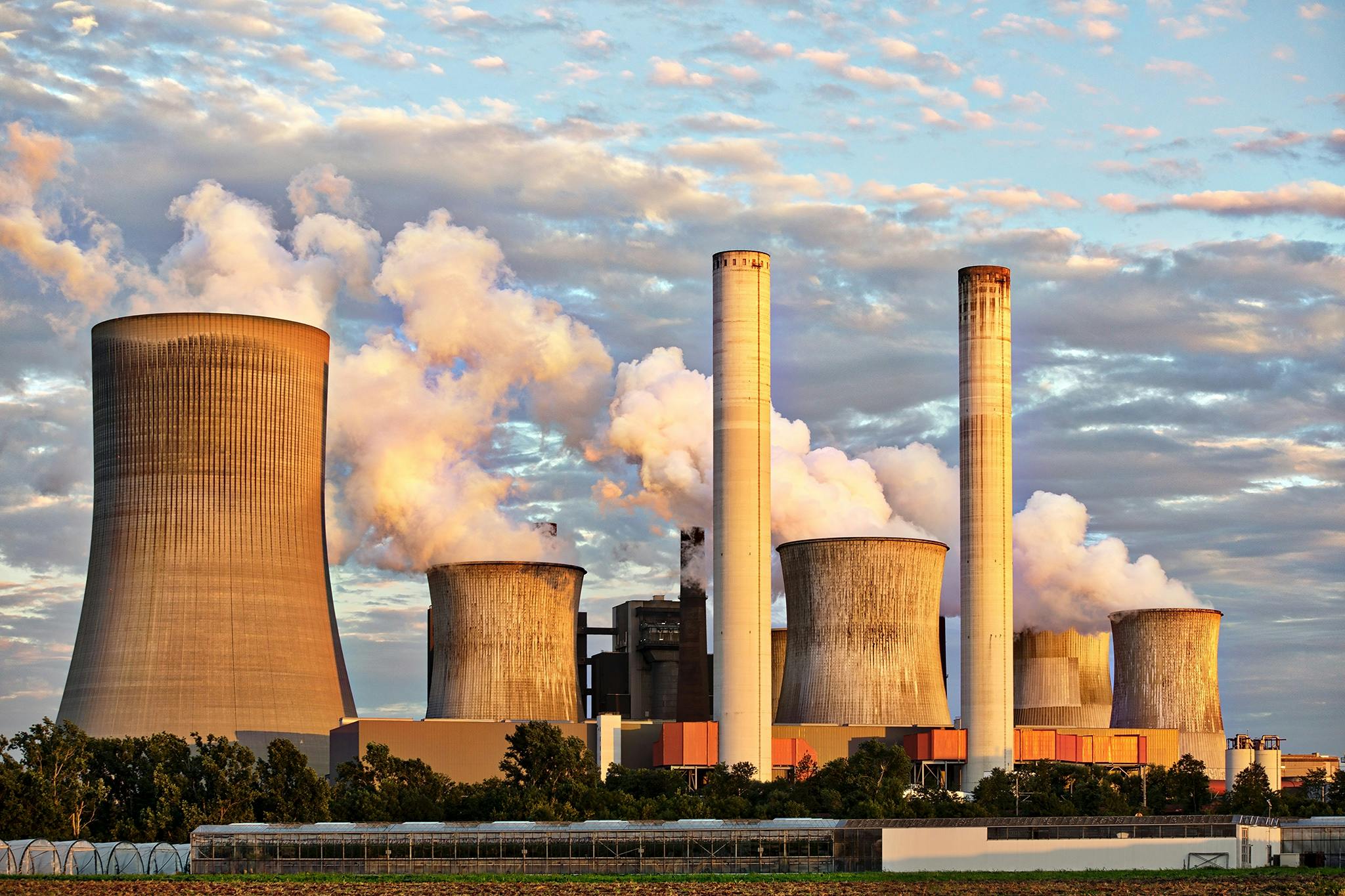
The power station, located in Ashkelon, Israel, is owned by an independent power producer in Israel that supplies electricity via the national power grid to public, business, and commercial entities in the country. It is a combined cycle power station, powered by natural gas, and is the second largest independent power station in the country. It can generate up to a total of 840 megawatts of electricity.
The OEM in this project is one of the veteran companies in the field of desalination, water, and wastewater treatment.
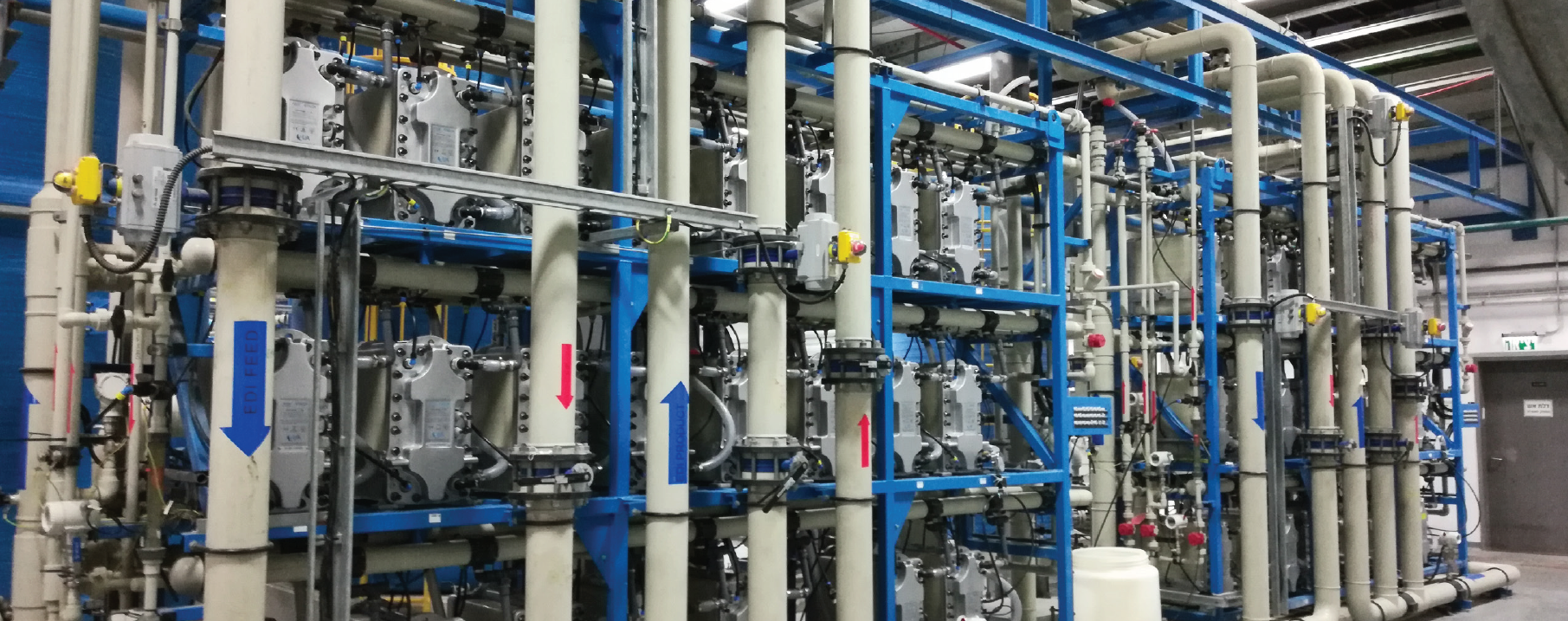
The client required demineralized water for its boiler application. The water source is city water supply, which is filtered through multimedia filters, followed by two pass reverse osmosis, with final polishing by electrodeionization (EDI).
Electrodeionization is continuous, chemical-free process that removes ionized and ionizable impurities from the feed water using DC power. EDI is most commonly used to treat Reverse Osmosis (RO) permeate and replaces Mixed Bed (MB) ion exchange; producing high purity water of up to 18 M Ω.cm.
EDI eliminates the need to store and handle hazardous chemicals required for MB ion exchange resin regeneration and associated waste neutralization steps. EDI also has lower space requirement, low operating cost, and a quick payback. In addition, it provides constant uninterrupted high-quality feed water to the plant.
Fractional Electrodeionization (FEDI) is an advancement of EDI technology that was developed to address the limitations of conventional EDI. EDI is a patented two stage process that operates in a dual voltage configuration that reduces hardness scaling that may occur in conventional EDI.
FEDI’s unique design maintains an acidic condition in the first stage and basic condition in the second stage of the EDI concentrate chamber. This patented design reduces mineral scaling in the first stage and enhances silica removal in the second stage.